Has coronavirus made us more ethical consumers?
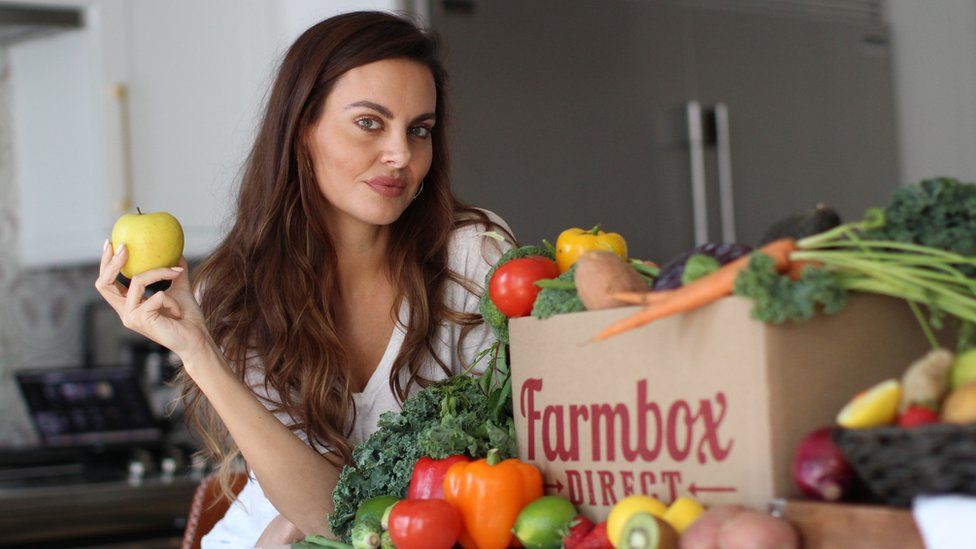
Kimberley Bird says the coronavirus pandemic has turned her into a more ethical, more environmentally-conscious consumer. And she is far from alone.
"This year has really kicked my awareness into overdrive," says the 32-year-old, from Yeovil, in the South West of England.
"I look at products I'm using, and find more environmentally-friendly alternatives," she says. "And I reuse whatever I can. Anything I don't need, I donate or give away."
With Covid-19 and the resulting lockdowns increasing work and financial insecurities for many of us, you might think that we have had to quietly drop our ethical and environmental concerns when shopping.
However, numerous reports and studies have in fact shown that the opposite is true, and that coronavirus has focused our minds on helping to create a better, healthier world.
Take a 2020 global survey by management consultancy firm Accenture. It said that consumers "have dramatically evolved", and that 60% were reporting making more environmentally friendly, sustainable, or ethical purchases since the start of the pandemic. Accenture added that nine out of 10 of that percentage said were likely to continue doing so.
Meanwhile, a study by research group Kantar said that since Covid-19 sustainability was more of a concern for consumers than before the outbreak. And 65% of global respondents told a survey by pollsters Ipsos Mori "that it is important that climate change is prioritised in the economic recovery after coronavirus".
Are we seeing an ethical and environmental consumer revolution that is here to stay?
"It's clear that consumption is looking very different than it did [before Covid]," says Oliver Wright, global lead of consumer goods and services at Accenture.
"This is a black swan event [surprise occurrence that has a major, lasting impact]. It is making people think more about balancing what they buy, and how they spend their time, with global issues of sustainability."
Ashley Tryner has seen firsthand just how much consumer behaviour changed in 2020. She is the founder of New York-based Farmbox Direct, which since 2014 has posted boxes of organic fruit and vegetables to homes across the continental US.
She says that last year the firm saw its sales soar by more than 30 times 2019's levels. "Overnight, the company had to shift operating elements to handle growth that would typically come over a few years, and with several million in marketing spend," says Ms Tryner.
Although some people question the merits of organic farming, the number of people buying organic in general is increasing. Overall, the US organic products market was forecast to have seen sales rise by 9.5% last year to $252bn (£186bn).
In the UK, the data for the Soil Association showed that sales were due to increase by exactly the same percentage, to £2.6bn, a 10-year high.
"The coronavirus has brought our food and farming systems sharply into focus, exposing the fragility of our food production systems, and inflexible supply chains," says Clare McDermott, the Soil Association's business development director.
Reports on both sides of the Atlantic have also shown that since Covid more people are now choosing to shop locally, and from small businesses, which can reduce the environmental impact of food and other product deliveries, by cutting the length of supply chains.
Norrina Meechan is one such person. And although the 50-year-old from Lennoxtown, near Glasgow, had a very specific reason for starting to shop more locally last year, she says she is going to keep it up after the pandemic.
At the start of the UK's first lockdown, she was recovering from a caesarean section, and so couldn't drive to the shops. She found the solution on her local Facebook Marketplace pages.
"I get fresh fruit and veg delivered by a local supplier, and use a nearby butcher," she says. "I've also bought some ready to cook meals from a local hotel when they had to adapt.
"I know how much of a difference it makes to the business owners, their families and staff. And there is great variety."

Komentar
Posting Komentar